

Presentation
NBIA is a group of rare neurogenetic disorders characterized by iron accumulation in the basal ganglia, associated with clinical manifestations that can begin in early childhood and include extrapyramidal syndrome (akinesia, rigidity dystonia, myoclonia, tremor..), associated with progressive cognitive decline, behavioral disorders, and/or cerebellar syndrome. Around fifteen genes are currently being studied for diagnosis. Wide variations in phenotypes, overlaps with other genetic diseases, the large number of cases without a molecular diagnosis (≈70%), late-onset forms, and the possibility of offering treatment with iron chelators justify the use of genome analysis.
The aim of this indication is to clarify the criteria for access (or request) to genome sequencing and the role of first-line panel sequencing.
Criteria before considering a discussion in MDM-FMG
No STHD proposed at present for:
- Sporadic cases, onset > 50 years of age
Sporadic cases with onset <50 years of age or familial cases:
- Thorough clinical examination
- Brain MRI with ‘Susceptibility Phase and especially T2*’ sequence and sagittal T1, to be supplemented with a brain CT scan if there is any doubt about calcium deposits
Send in pairs at a minimum, in threes if possible (except *)
- Sample ≥ 1 other affected individual (all available, preferably distant relatives) and/or
- Sample ≥ 1 healthy parent:
- Sporadic cases: both parents if possible
- Healthy relative (first cousin, etc.): give preference to the ‘non-at-risk’ branch
- Healthy but at-risk relative: give preference to those older than the age at which the disease first appeared in the index case
(incomplete penetrance and variable expressivity of diseases: be aware of the risk of unwanted presymptomatic diagnosis in at-risk individuals)
* ‘Solo’ sampling authorised in exceptional cases: if onset of disease < 20 years of age or clear family context (≥ 2 affected, consanguinity)
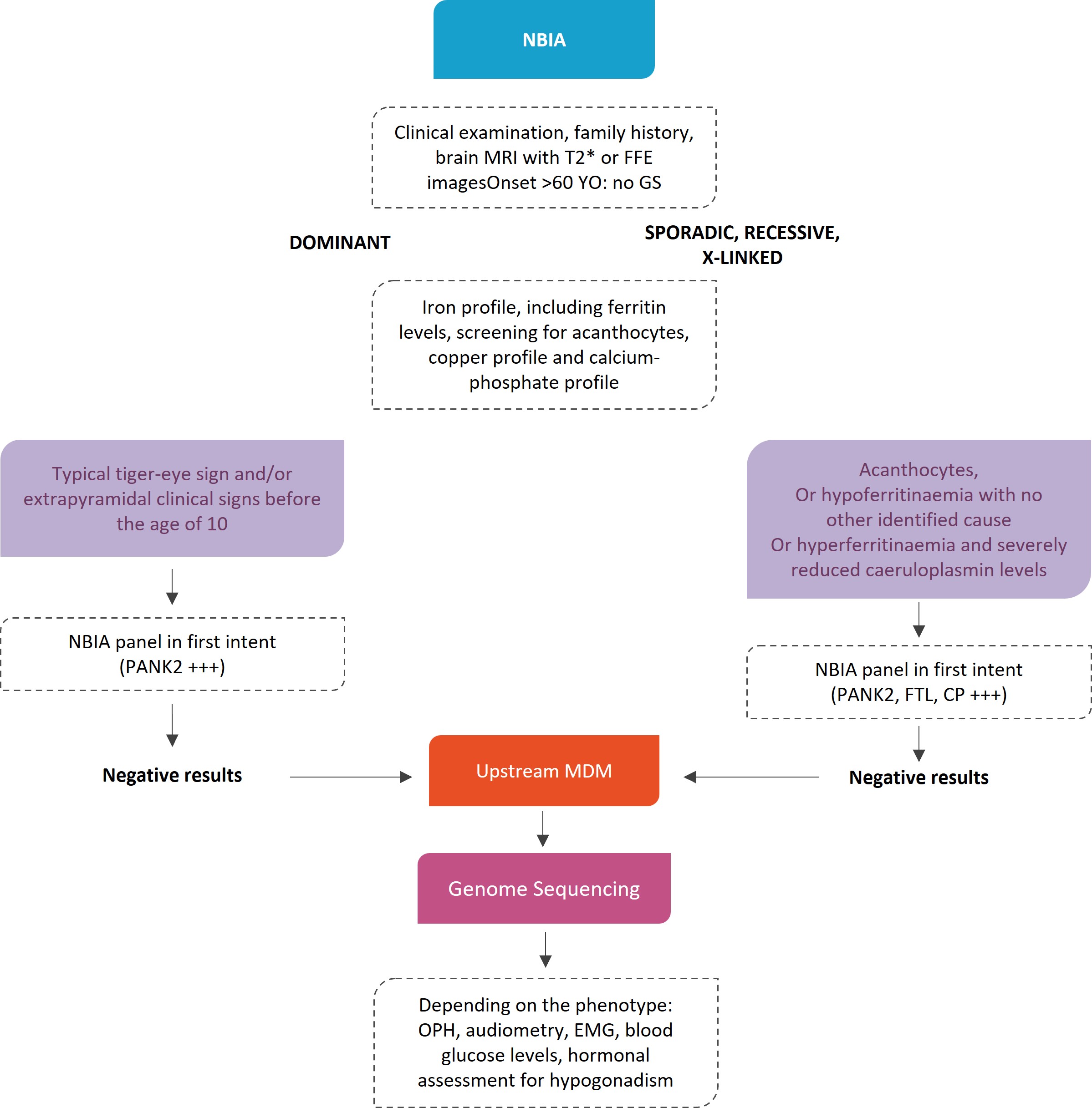
Genome Sequencing in diagnostic strategy
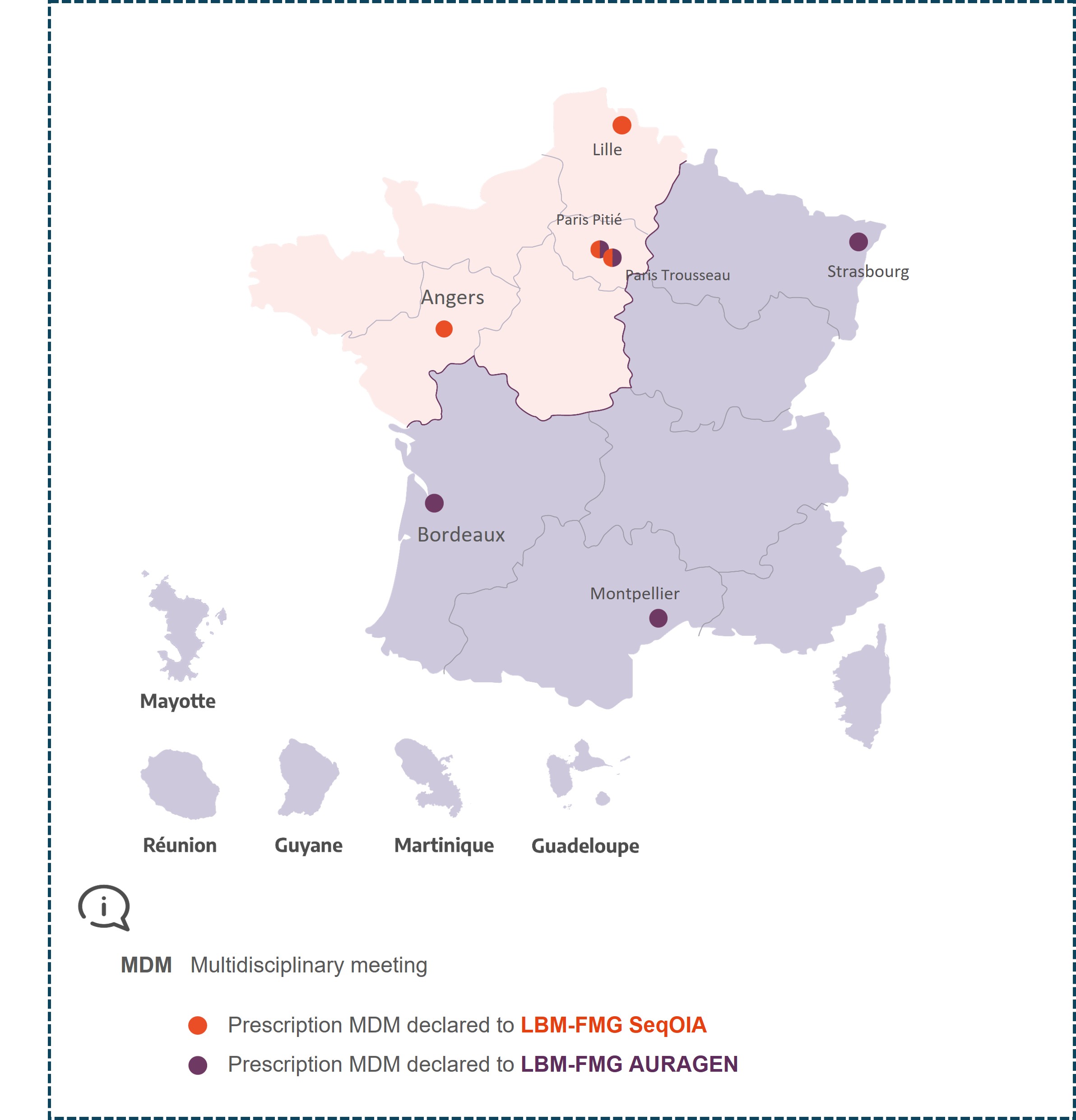
MDM cartography
MDM Neurogenetics Paris Pitié
Claire EWZNCZYK
Alexandra DURR
Perrine CHARLES
Anna HEINZMANN
MDM Neurogenetics Paris Trousseau
MDM Neurogenetics Angers
MDM Neurogenetics
MDM Neurogenetics Strasbourg
Mathieu ANHEIM
mathieu.anheim@chru-strasbourg.fr
Christine TRANCHANT
christine.tranchant@chru-strasbourg.fr
Solène FRISMAND
Matthieu BEREAU
Christel THAUVIN
Anne DOE DE MAINDREVILLE
adoedemaindreville@chu-reims.fr
Juliette Piard
MDM Neurogenetics Montpellier
MDM Neurogenetics Lille
David DEVOS
Luc DEFEBVRE
Sylvie NGUYEN-THETICH
sylvie.nguyenthetich@chru-lille.fr
Vincent HUIN
Gaël NICOLAS
Eugénie MUTEZ