

Carried by: Défiscience
References:
Clinician(s): Lydie BURGLEN, Alexandra AFENJAR, Madeleine HARION
Biologist(s): Lydie BURGLEN
Presentation
Concerns degenerative or developmental neurological disorders of the cerebellum and/or brainstem, detected early (at birth, even in utero, or before the age of 5y). Patients, from fetuses to adults but mainly children, have highly variable motor disabilities, sometimes associated with other neurological, sensory or extra-neurological disorders. Their follow-up and functional and aetiological diagnosis require neuropaediatric/neurological expertise.
Criteria before considering a discussion in MDM-FMG
Patients of any age presenting with clinical and/or neuroradiological findings suggestive of congenital or very early posterior fossa involvement, defined by:
- Neurological signs present before the age of 5,
- And at least one of the following signs
- Cerebellar signs
- And/or posterior fossa abnormality on MRI (atrophy, hypoplasia and/or dysplasia of the vermis, cerebellar hemispheres and/or brainstem).
Given this picture, it is essential to gather the following information before the multidisciplinary team meeting:
- Family history
- History of the disease and detailed neurological examination
- Basic biological assessment according to the decision trees established by the CRMR (Regional Centre for Rare Diseases) according to the group of pathologies
- Brain and posterior fossa MRI
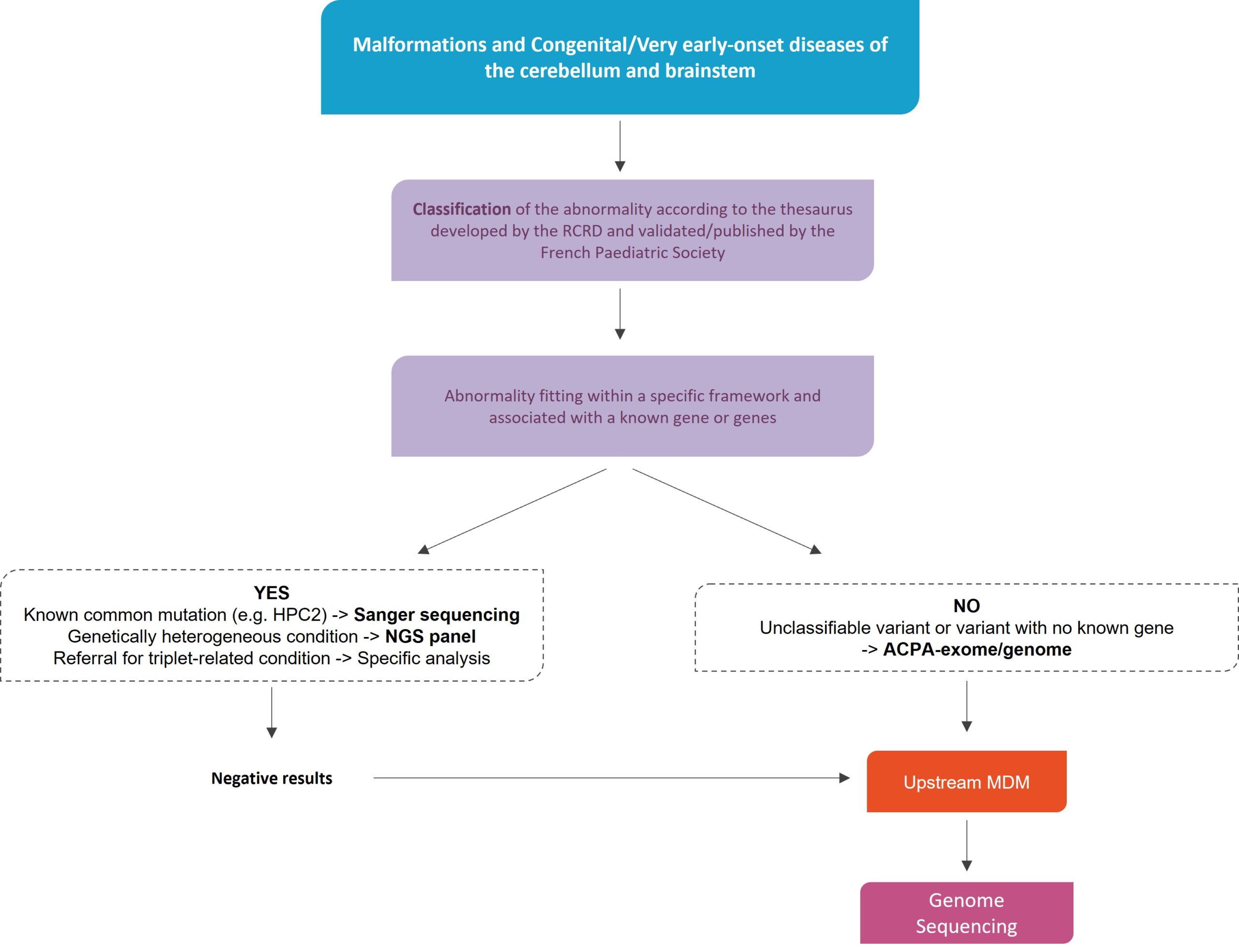
- Normal analysis of the panel of 220 genes involved in Malformations and Congenital/Very early-onset diseases of the cerebellum and brainstem ; or atypical clinical findings justifying the WGS without prior panel analysis (according to multidisciplinary team meeting’s decision)
Genome Sequencing in diagnostic strategy
MDM cartography
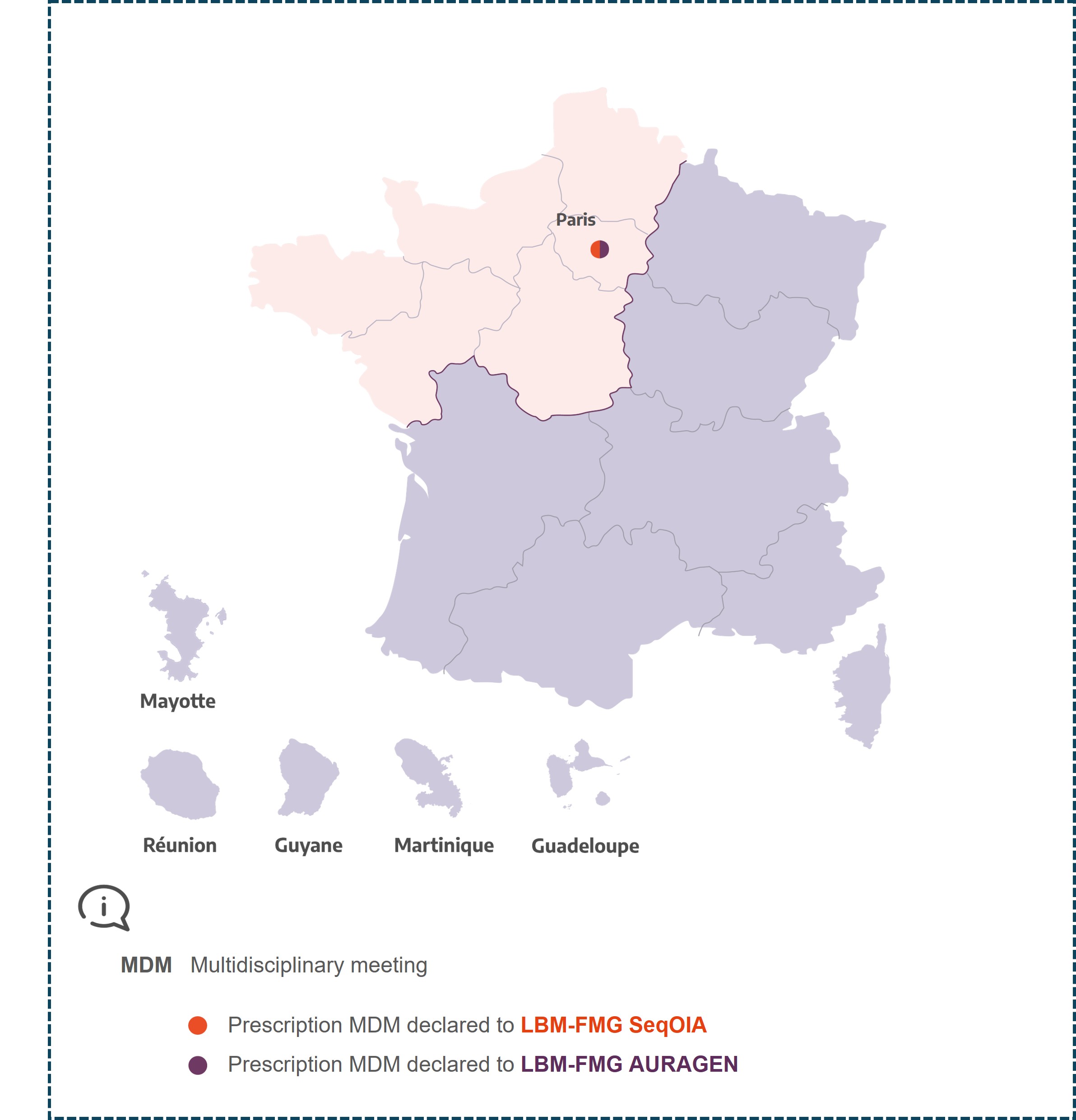
MDM
Type of the MDM
City of the coordinator
Name, first name, and email of the contact