

Presentation
Hypertension (HTN) is predominantly polygenic. However, monogenic forms account for approximately 1% of cases in young individuals and require specific diagnostic and genetic evaluation. This pre-indication applies to adult and pediatric patients (< 40 years) with confirmed hypertension after exclusion of classical secondary causes, including malignant presentations.
Criteria before considering a discussion in MDM-FMG
Access requires prior phenotyping by an European Hypertension Excellence Center or an accredited Blood Pressure Clinic (www.sfhta.eu).
Direct access is granted to pediatric departments and functional exploration centers.
All three criteria below must be fulfilled.
- General Prerequisites
- Onset of hypertension before 40 years
- Confirmation by ambulatory blood pressure monitoring (ABPM)
- Exclusion of classical secondary causes
- Pheochromocytoma/paraganglioma excluded (FIRENDO pathway)
- Suggestive Biological or Clinical Features
At least one of the following:
- Primary aldosteronism before 30 years
- Elevated renin without renal insufficiency or renovascular disease
- Pseudohyperaldosteronism (hypokalemia with suppressed renin and aldosterone)
- Unexplained hypo or hyperkalemia
- Resistant hypertension (≥ 3 antihypertensive agents)
- Family History or De Novo Presentation
- Early-onset or severe hypertension in a first-degree relative
- Premature cardiovascular events (< 60 years), including stroke or unexplained end-stage kidney disease
- Highly specific phenotype suggestive of a de novo mutation
Special Consideration: Malignant Hypertension
Patients with malignant hypertension may be discussed early:
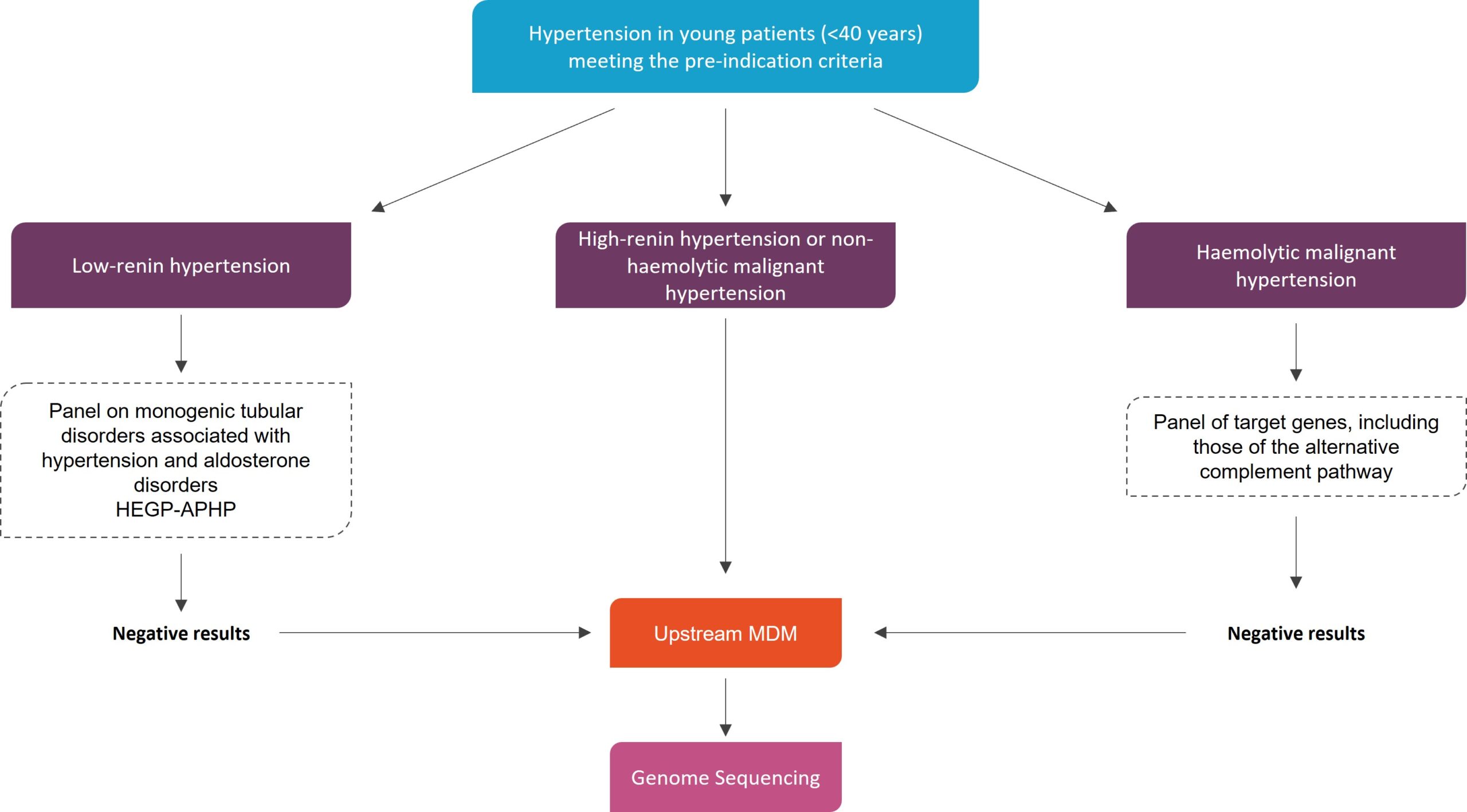
- With hemolysis (suspected TMA/aHUS):
A targeted gene panel including alternative complement pathway genes must be negative before whole-genome sequencing.
- Without hemolysis:
Malignant hypertension in the index case AND family history of early hypertension or premature cardiovascular complications.
Trio analysis (index case and both parents) is strongly recommended whenever feasible.
Genome Sequencing in diagnostic strategy
MDM cartography