

Carried by: MaRIH
References:
Clinician(s): Laurence BOUILLET
Biologist(s): Gaëlle HARDY
Presentation
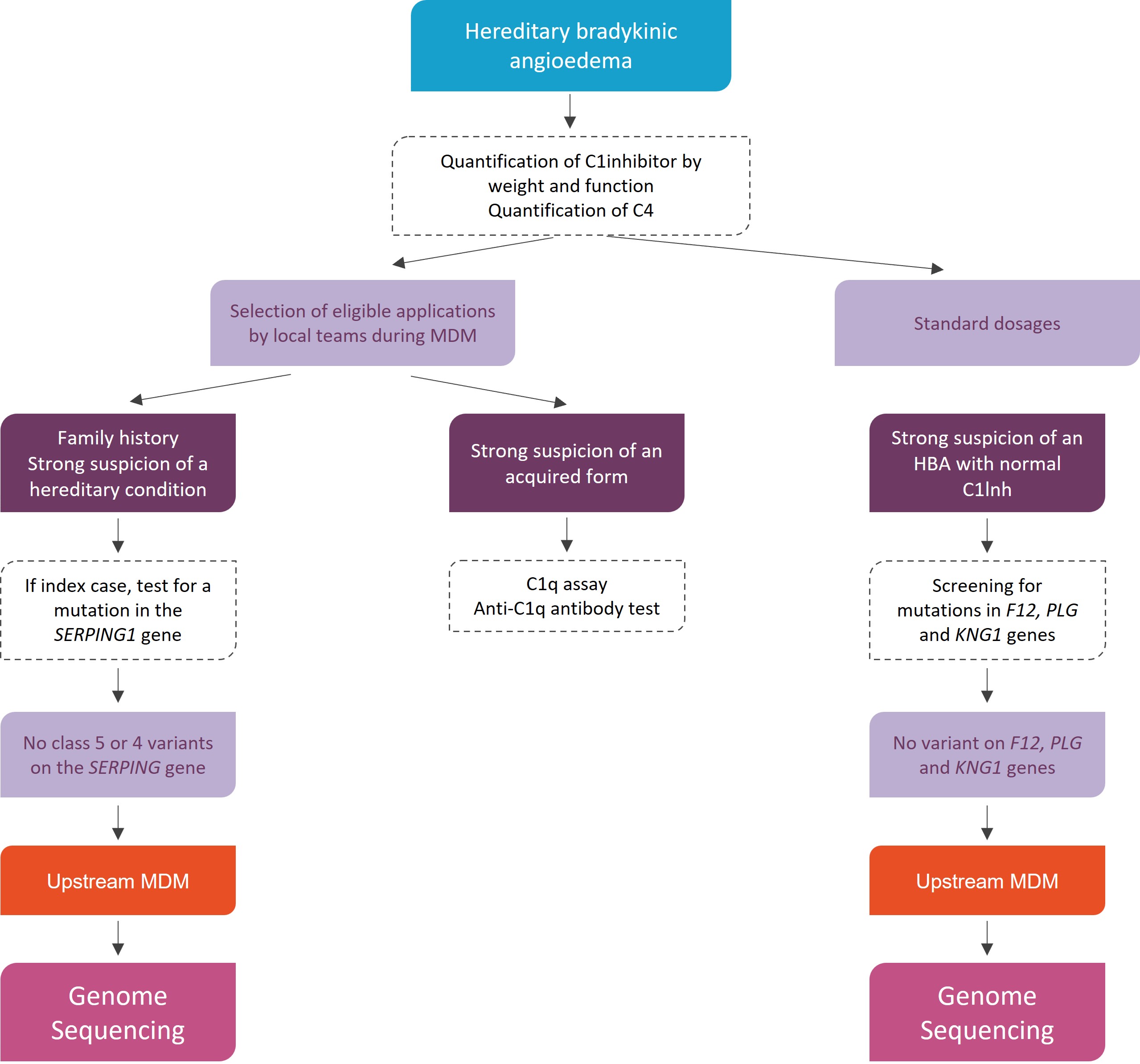
Bradykinin-induced angioedema requires specific treatment targeting the synthesis and action pathways of bradykinin. The occurrence of potentially serious attacks (upper airways) at any time significantly impairs patients’ quality of life.
C1 inhibitor testing guides molecular testing, which involves only a small number of known genes.
WGS/WES has proven useful in identifying new genes, reducing diagnosis times, and can guide personalised treatment based on the gene involved.
Criteria before considering a discussion in MDM-FMG
- Bradykinin-induced angioedema: sudden onset of localised oedema in the dermo-hypodermic layer or submucosa. It is always transient but can last several days, disappearing without sequelae.
- Weight and functional measurement of C1 inhibitor
- Molecular study: known and recurrent genes (SERPING1, F12, PLG, KNG1)
- Informative family: 3 to 5 individuals available for sampling, at least 2 of whom are affected
Genome Sequencing in diagnostic strategy
MDM cartography
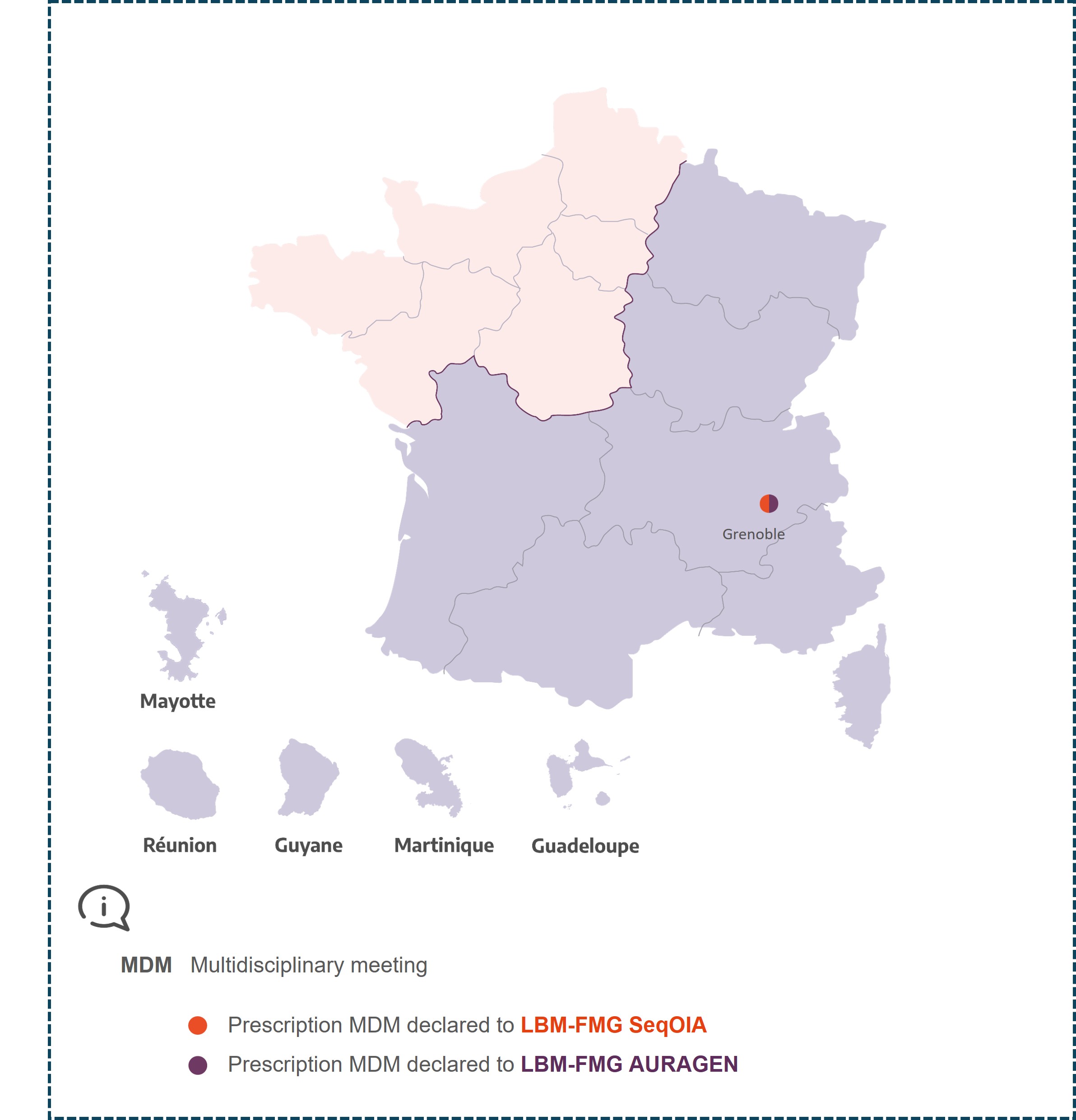
MDM
Type of the MDM
City of the coordinator
Name, first name, and email of the contact
MDM-FMG Angioedema
National
Grenoble
Laurence BOUILLET
Isabelle BOCCON-GIBOD
Request for a clinical professional indemnity insurance assessment