

Presentation
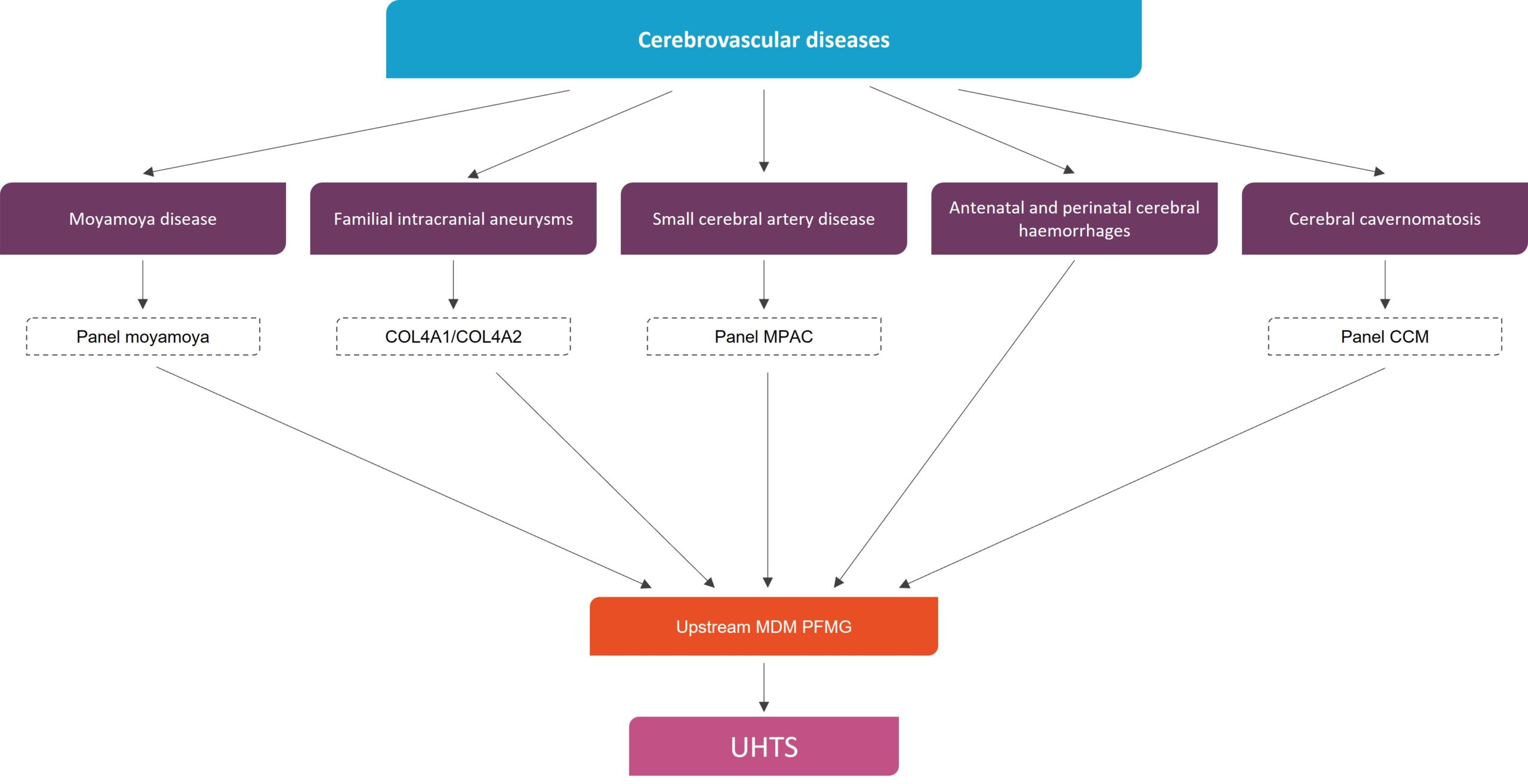
Rare cerebrovascular diseases include:
- Moyamoya disease
- Familial intracranial aneurysms
- Small cerebral artery disease
- Antenatal and perinatal cerebral haemorrhages
- Cerebral cavernomatosis
Criteria before considering a discussion in MDM-FMG
Moyamoya angiopathy
- Radiologically confirmed moyamoya angiopathy (chronic steno-occlusion of the internal carotid fork, and deep collateral network)
- In children: unilateral or bilateral moyamoya angiopathy, syndromic or non-syndromic
- In adults: bilateral and/or syndromic moyamoya angiopathy
- AND exclusion of the following causes : history of brain irradiation, sickle cell disease, trisomy 21, type 1 neurofibromatosis, Noonan syndrome
- AND negative moyamoya gene-panel sequencing
Who to sample for WGS in addition to the index ?
- Both parents in all paediatric cases, and in sporadic adult cases
- ≥ 1 affected relative (all available, priorizing distant relatives) in cases of familial moyamoya angiopathy
Familial intracranial aneurysms
1) Radiologically documented intracranial aneurysms in ≥ 3 related subjects
2) AND ≥ 2 intracranial aneurysms in ≥ 1 of the affected subjects
3) AND exclusion of a syndromic form in the index case (eg : polycystic kidney disease)
4) AND negative screening for COL4A1 and COL4A2 genes (systematic) and PKD1/PKD2 (if renal cysts are present)
Who to sample for WGS in addition to the index ?
≥ 2 affected relatives (all available, priorizing distant relatives)
Cerebral small vessel diseases (cSVD)
A) Familial cSVD
- Severe cSVD in ≥ 3 relatives, discordant with their cardiovascular risk profile
- AND stroke and/or cognitive impairment before 55 years-old in at least one relative
- AND negative gene-panel testing for hereditary cSVD
Who to sample for WGS in addition to the index?
≥ 2 affected relatives (all available, priorizing distant relatives)
B) Familial or sporadic cSVD with strong suspicion of pathogenic variant in non-coding regions, based on cDNA analysis results.
Who to sample for WGS ? Only the index
C) Antenatal or perinatal cerebral haemorrhage
- Exclusion of prematurity, foetomaternal platelet alloimmunization, haemostasis disorder, infections, drugs, trauma, monochorionic twinning, vascular malformation, cytogenetic causes
- AND availability of parental DNA
Who to sample for WGS ? The index and both parents (trio analysis)
Foetal cerebral haemorrhage
- Foetal cerebral haemorrhage diagnosed by prenatal MRI and/or foetopathological examination
- AND exclusion of foetomaternal platelet alloimmunization, haemostasis disorder, infections, drugs, trauma, monochorionic twinning, vascular malformation, cytogenetic causes
- AND availability of parental DNA
Who to sample for WGS ? The index and both parents (trio analysis)
Multiple cerebral cavernous malformations
- Multiple cavernous malformations in ≥ 2 relatives
- AND typical cavernous malformations on MRI in each relatives
- AND negative gene-panel testing for CCM1/2/3 genes (combining gDNA and cDNA analyses)
Who to sample for WGS in addition to the index ?
≥ 1 affected relative (all available, priorizing distant relatives)
Specific situation: WGS may be considered in a sporadic patient when a large genomic rearrangement is suspected based on first-line testing. In this case, only the index case needs to be sampled for WGS.
B) Familial or sporadic cSVD with strong suspicion of pathogenic variant in non-coding regions, based on cDNA analysis results.
Who to sample ? Only the index
The information to be submitted to the multidisciplinary team are detailed in the form available on the ROFIM platform.
UHTS in diagnostic strategy
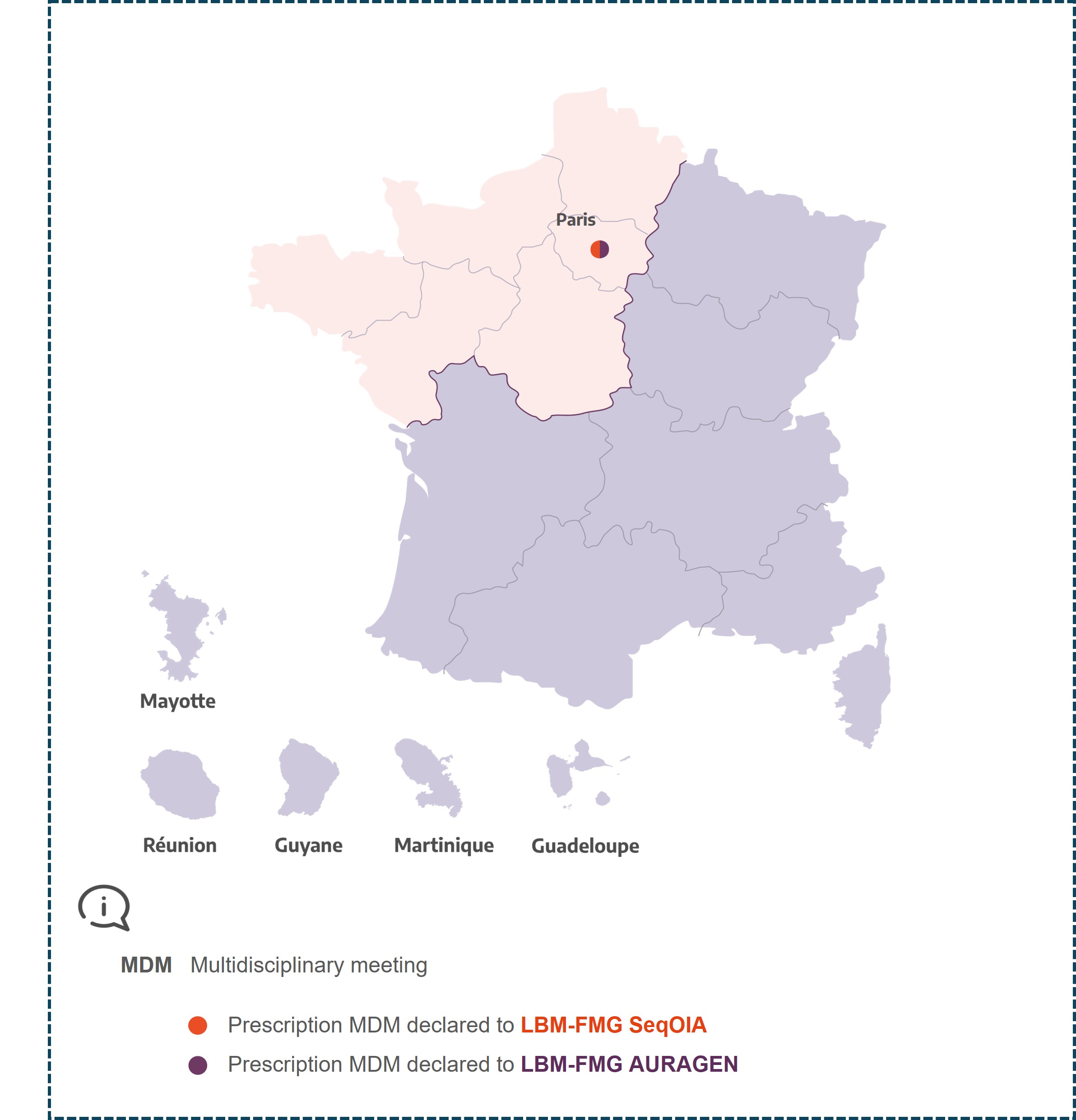
MDM cartography
MDM Rare cerebrovascular diseases Children
Manoëlle Kossorotoff