


Carried by: "Rare constitutional disorders of red blood cells and erythropoiesis" group (MCGRE)
References:
Clinician(s): Fréderic GALACTEROS, Pablo BARTOLUCCI
Biologist(s): Philippe JOLY
Presentation
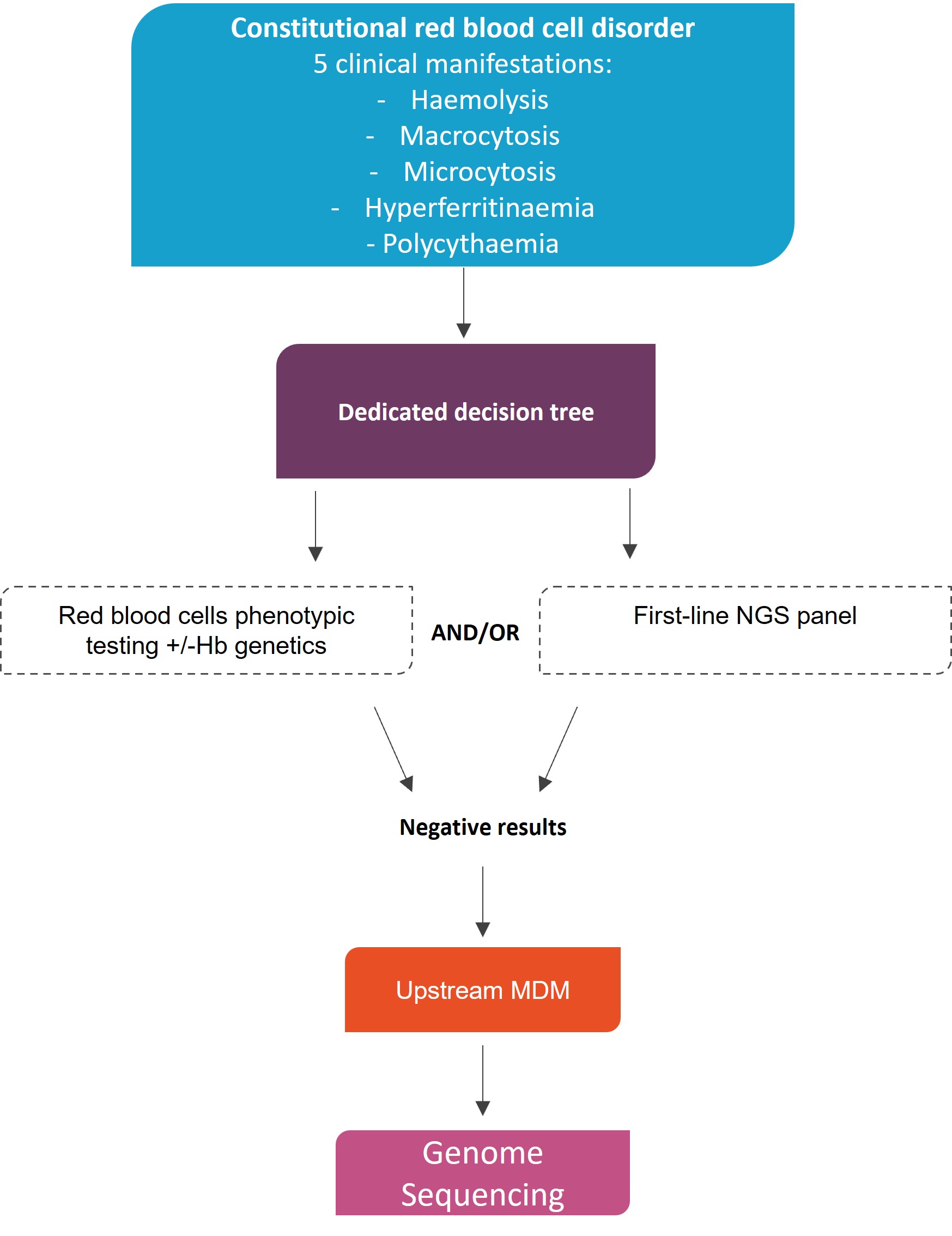
This pre-indication concerns two major groups of pathologies for which all known or identifiable causes using phenotypic and/or genotypic methods have been ruled out:
- Patients with unexplained anaemia and/or haemolysis
- Patients with idiopathic polycythaemia vera
The constitutional origin is most often supported by the existence of several familial cases. This pre-indication is particularly interesting for paediatric transfusion-dependent cases where the interpretation of phenotypic tests is completely distorted.
Criteria before considering a discussion in MDM-FMG
- Basic phenotypic and genotypic tests for red blood cell pathology must have been performed
- Contact with an MCGRE biologist is essential
- Significant clinical impact with frequent chronicity
- Examples: Severe anaemia, compensated or uncompensated haemolysis, splenomegaly, haemochromatosis, PAH, pallor/jaundice/fatigue, etc.
- Consider the most appropriate family trio if Genome Sequencing is indicated in the RCP
Detailed documentary resources are available from the MCGRE network:
- Decision trees (in french): filiere-mcgre.fr/espace-professionnels-de-sante/les-laboratoires-de-diagnostic/
- ANPGM recommendations (in french): filiere-mcgre.fr/wp-content/uploads/2019/06/ANPGM_137-Pathologies_du_globule_rouge.pdf
- An article on interpreting a haemoglobin phenotype assessment (ABC 2010, 68(4):455-64).
Genome Sequencing in diagnostic strategy
MDM cartography
MDM
Type of the MDM
City of the coordinator
Name, first name, and email of the contact
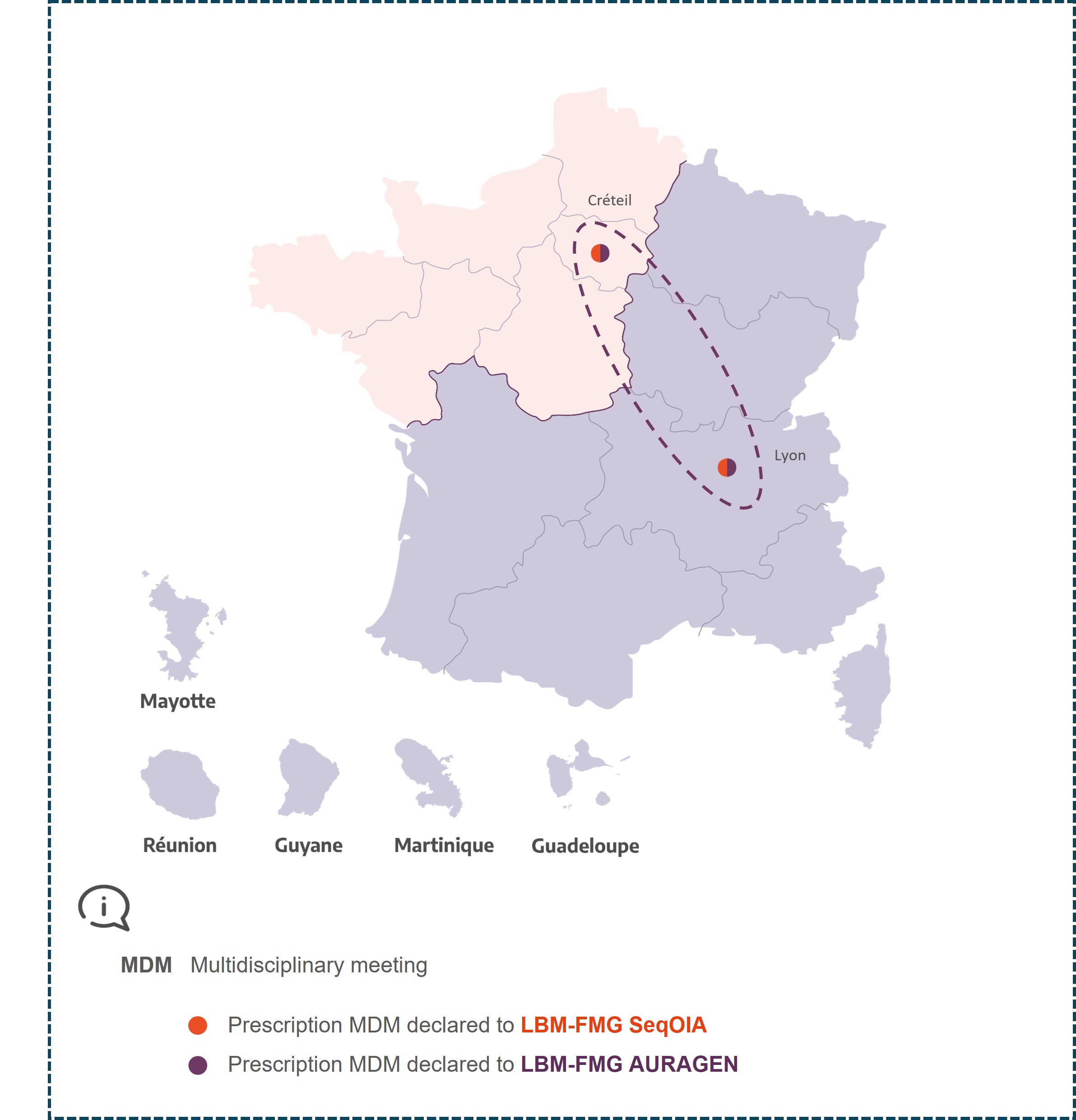
MDM National diagnostic for red blood cells
National
Créteil, Lyon