

Presentation
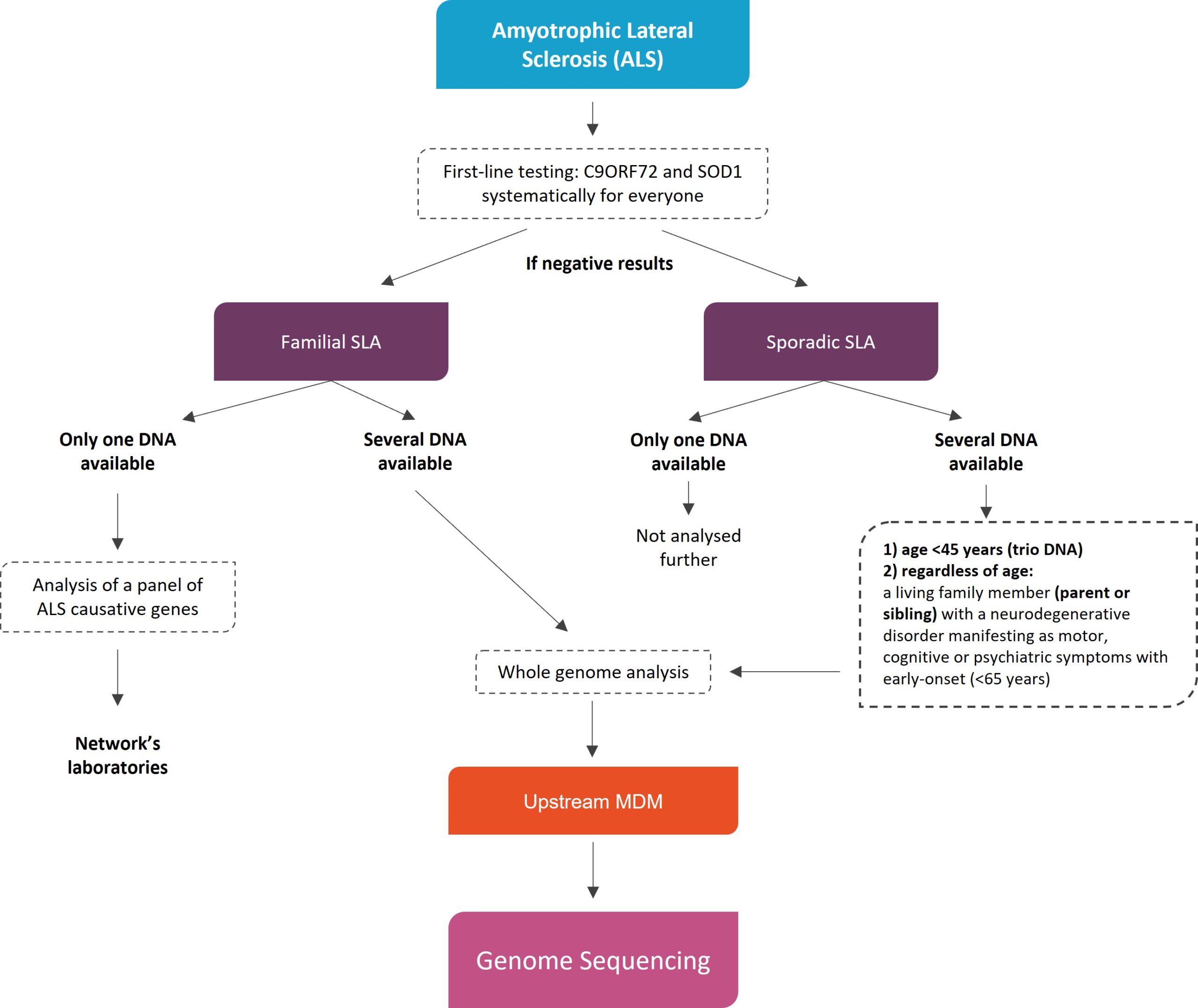
ALS, or Lou Gherig’s disease, is the most common motor neuron disease in adults. ALS can be split into sporadic forms (85%) and familial ones (15%; a second case already identified in the family) : both can be linked to pathogenic gene mutations. The two most frequently mutated genes are C9ORF72 and SOD1. C9ORF72 is being studied by Genescan and SOD1 is the target of an antisense therapeutic strategy.
Patients eligible for STHD will be those who test negative for these two genes and for whom DNA from both healthy parents or at least one other family member with ALS or another neurodegenerative disease with early onset (<65 years) motor, cognitive or psychiatric expression is available.
Criteria before considering a discussion in MDM-FMG
- fALS (definition: a case of ALS among first- or second-degree relatives) with negative SOD1/C9ORF72 analyses + DNA available for one affected member (ALS) who is a direct ascendant or sibling (sample can be taken from a living subject or from a DNA bank).
- sporadic ALS younger than 45, negative SOD1/C9ORF72 analyses, with DNA from 2 parents (not affected) available (either 2 living parents or with a preserved DNA source available).
- ‘Classicall’ ALS patients, negative SOD1/C9ORF72 tests, with DNA available for one affected family member (parent or sibling) with a motor-related neurodegenerative disease (non-ALS) or a cognitive or psychiatric disease with early-onset symptoms (under 65 years of age). DNA available for the associated family case, living or stored in a DNA bank.
Genome Sequencing in diagnostic strategy
MDM cartography
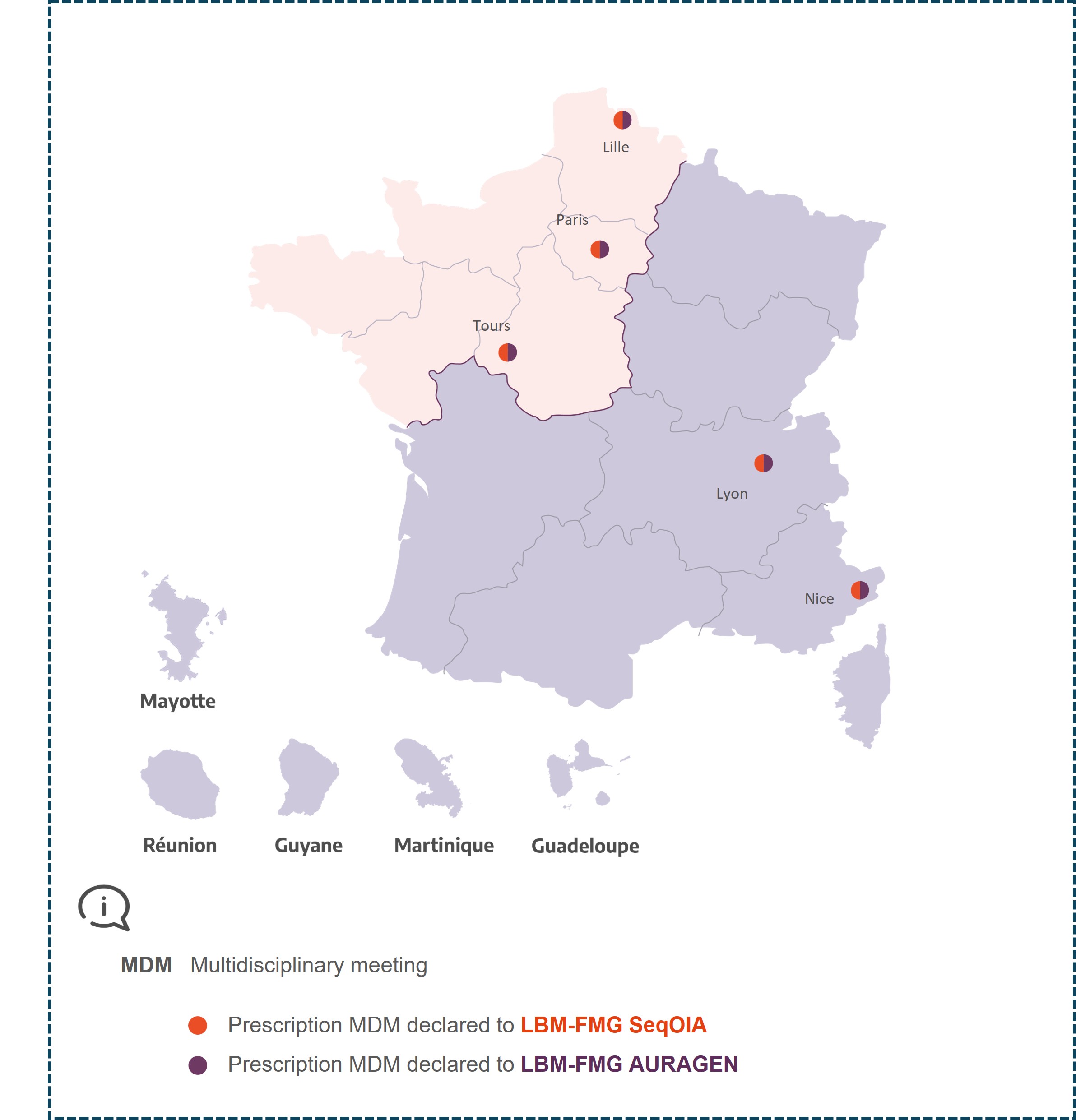
MDM-FMG ALS
Tours:
Philippe CORCIA
Lille:
Véronique DANEL-BRUNAUD
Nice:
Marie-Hélène SORIANI
Lyon:
Emilien BERNARD
Paris:
Maria Del Mar AMADOR