

Presentation
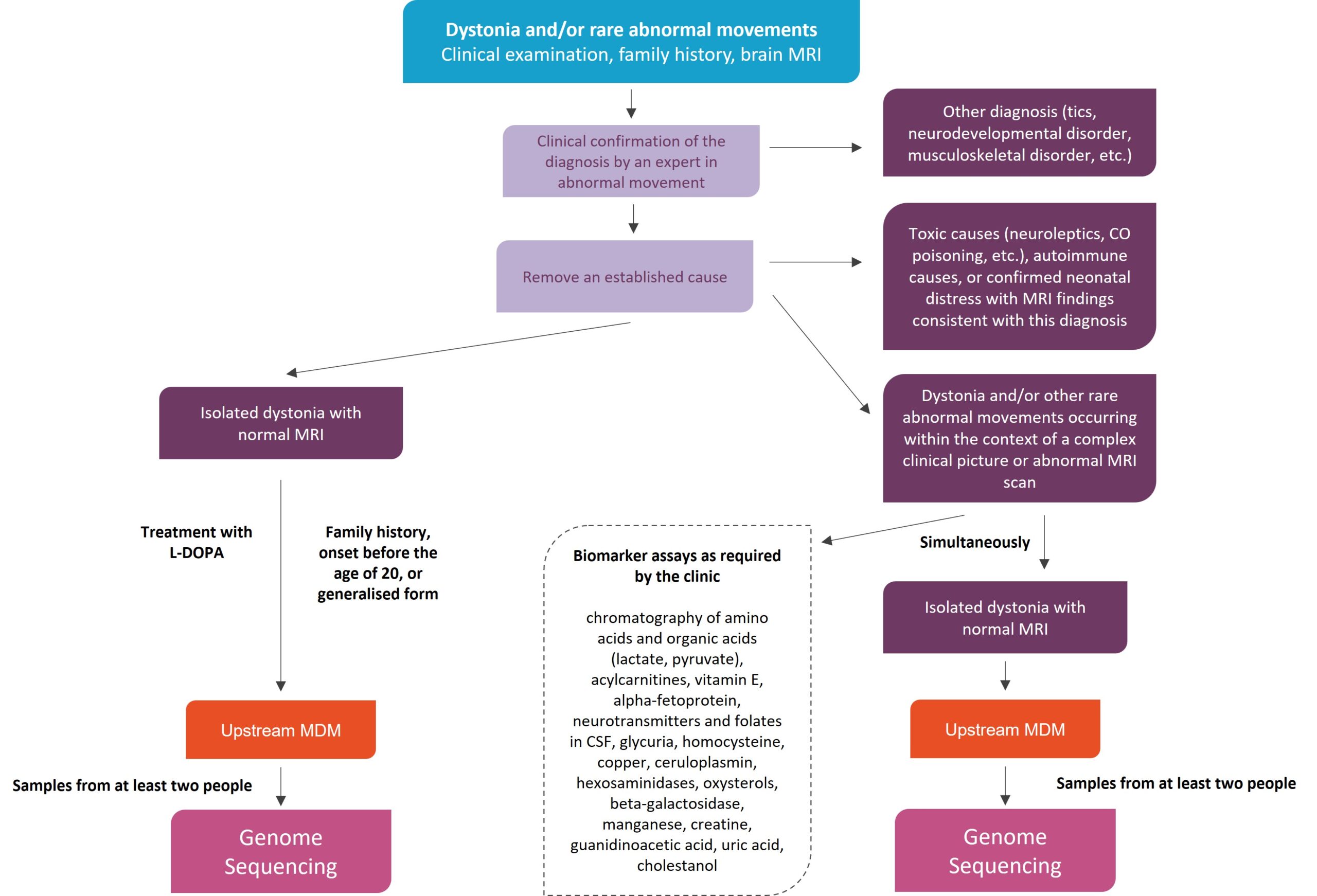
Dystonia and rare movement disorders are characterised by the onset, in children or adults, of dystonia (focal, segmental or generalised) and/or other movement disorders such as myoclonus, tremor, parkinsonism or chorea. Their molecular bases are numerous and heterogeneous. The standard diagnostic strategy recommends first ruling out acquired causes, then performing biomarker testing and next-generation sequencing simultaneously.
Criteria before considering a discussion in MDM-FMG
Sporadic cases with onset <50 years (<20 years for focal dystonia) or familial cases:
- Thorough clinical examination
- Brain MRI with T2*/SWI sequences, +/- brain CT scan if iron/calcium deposits are suspected
- If dopa-responsive dystonia is suspected, neurotransmitter levels in the CSF will be measured or a trial treatment with L-Dopa will be carried out
- If chorea is the primary symptom, genetic disorders caused by triplet expansion (HTT, JPH3, C9ORF72, SCA17, DRPLA genes) must be ruled out before proceeding genome sequencing
- In cases of complex symptoms or abnormal MRI scans suggesting a metabolic abnormality, biomarkers should be measured in parallel with the GS request.
Send in pairs at a minimum, trios if possible (except *) :
- Sample ≥ 1 other affected person (preferably distant relatives) and/or
- Sample ≥ 1 healthy parent:
- Sporadic case: both parents if possible
- Healthy relative (first cousin, etc.): favour the ‘non-at-risk’ branch ;
- Healthy but at-risk relative: favour those older than the age at which the disease began in the index case
- Incomplete penetrance and variable expressivity of diseases: be aware of the risk of unwanted presymptomatic diagnosis in at-risk individuals
- * ‘Solo’ sampling authorised in exceptional cases : if onset of disease < 20 years of age or clear family context (≥ 2 affected individuals, consanguinity)
Genome Sequencing in diagnostic strategy
MDM cartography
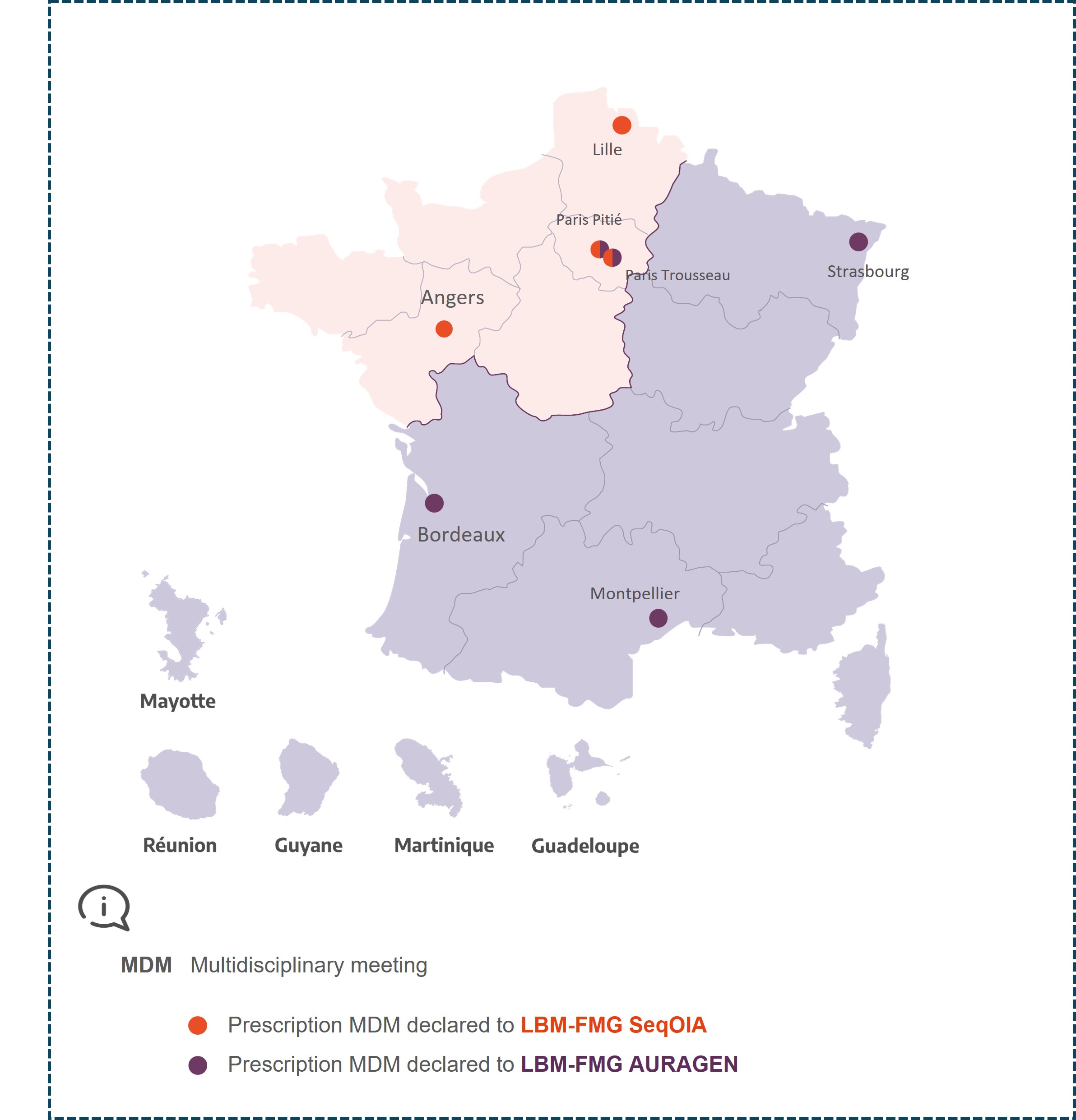
MDM Neurogenetics Paris Pitié
Aurélie MENERET
David GRABLI
Claire EWENCZYK
MDM Neurogenetics Paris Trousseau
MDM Neurogenetics Angers
MDM Neurogenetics Strasbourg
Mathieu ANHEIM
mathieu.anheim@chru-strasbourg.fr
Christine TRANCHANT
christine.tranchant@chru-strasbourg.fr
Solène FRISMAND
Mathieu BEREAU
Christel THAUVIN
Anne DOE DE MAINDREVILLE
adoedemaindreville@chu-reims.fr
Juliette PIARD
MDM Neurogenetics Montpellier
MDM Neurogenetics Lille
David DEVOS
Luc DEFEBVRE
Sylvie NGUYEN-THETICH
sylvie.nguyenthetich@chru-lille.fr
Gaël NICOLAS
Eugénie MUTEZ