

Presentation
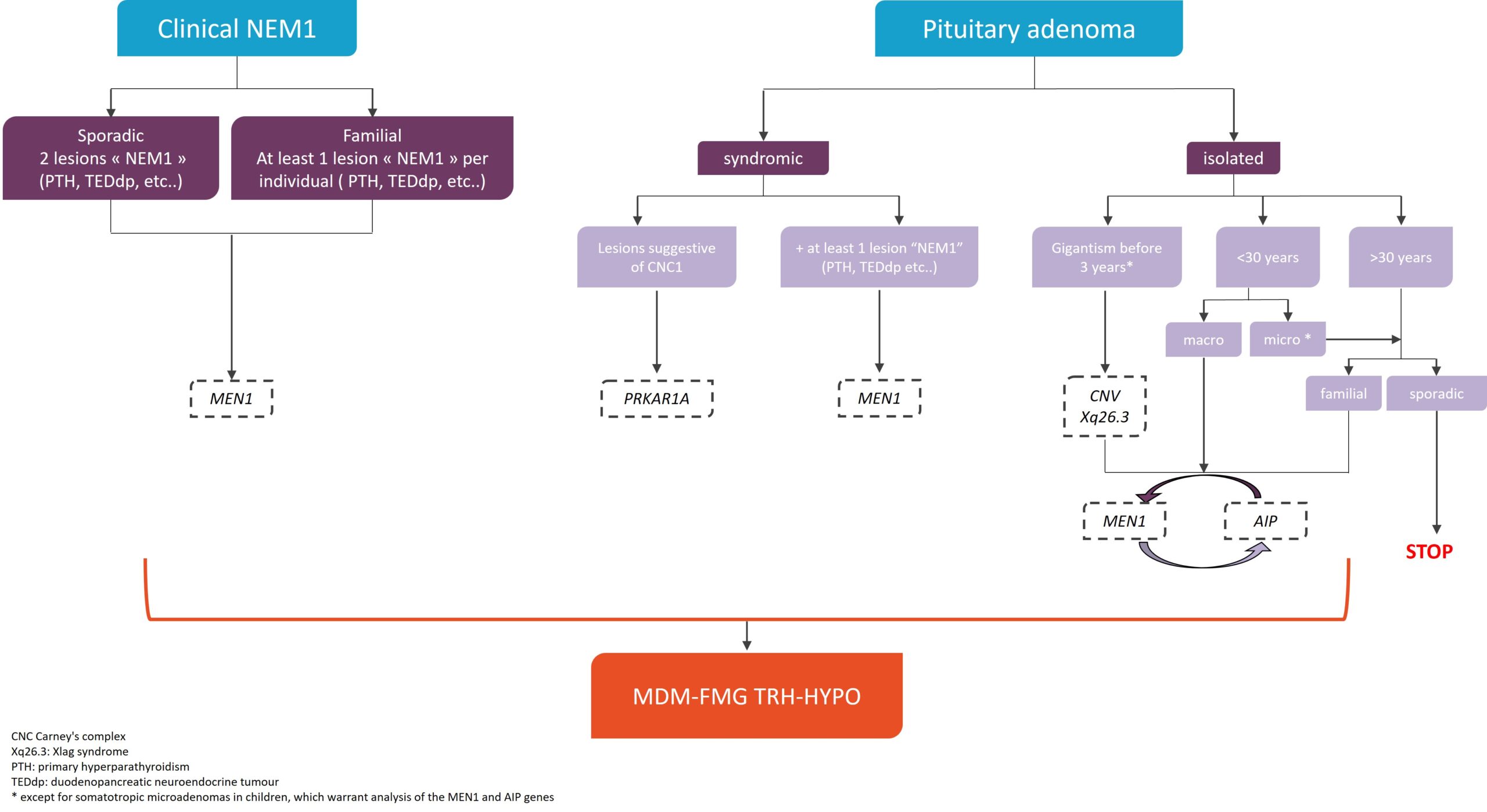
1- Familial pituitary hypersecretions
- regardless of age of onset
- sporadic cases only paediatric cases
- syndromic cases involving at least two other lesions, including one endocrine lesion
2- Clinical Type 1 Endocrine Neoplasia
- sporadic cases with at least 2 endocrine lesions falling within the spectrum of MEN1
- familial cases, including index cases and relatives, with at least 1 lesion falling within the spectrum of MEN1
Criteria before considering a discussion in MDM-FMG
1- Pituitary hormonal hypersecretions including one or more of the following pituitary secretions: corticotropin (ACTH), somatotropin (GH), thyrotropin (TSH), gonadotropin (FSH or LH) and prolactin (PRL) in three conditions
– familial, regardless of the age of onset of hypersecretion
– sporadic only in paediatric cases (< 18 years)
– syndromic, associated with other endocrine gland lesions (e.g. adrenal, digestive, etc.). For this subpopulation, the patient must have at least two other lesions, including one endocrine lesion.
2- Patients who meet the clinical definition of Type 1 Endocrine Neoplasia (NEM1) without an identified mutation in the NEM1 gene
– Either sporadic index cases with at least two endocrine lesions falling within the NET1 spectrum: hyperparathyroidism, duodenopancreatic neuroendocrine lesions, pituitary adenomas, thymic or pulmonary neuroendocrine lesions
-Either familial cases, with the index case and their relatives each having at least one lesion falling within the NEM1 spectrum.
+ Negative genetic analyses on a panel of genes including AIP and MEN1
UHTS in diagnostic strategy
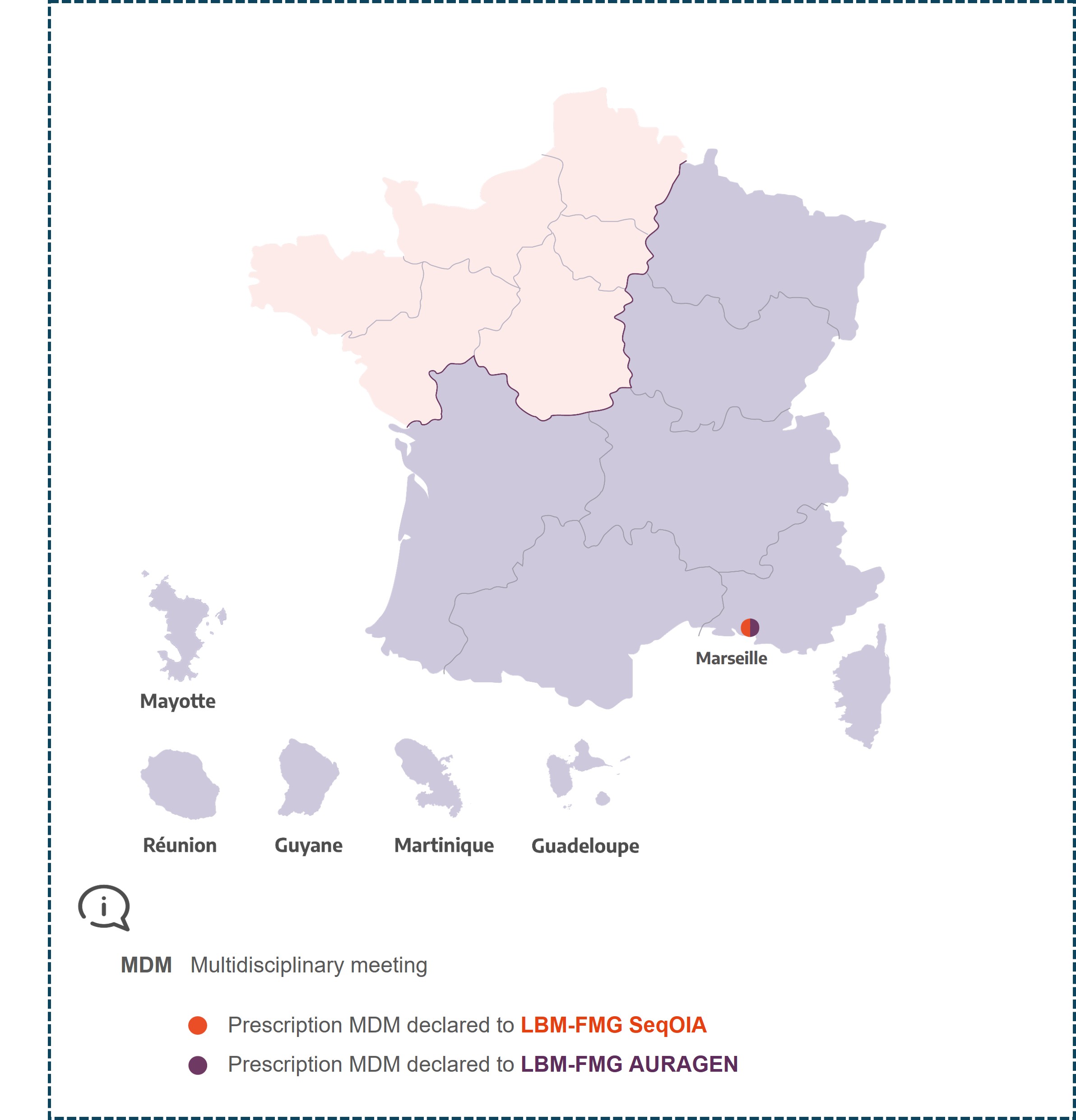
MDM cartography