


Presentation
Hyperlaxity: excessive tissue elasticity => joint hypermobility.
Clinical assessment using validated scores (Beighton score, Bulbena score).
Numerous diagnostic categories:
- Numerous syndromes with intellectual disability
- Myopathies
- Genetic skeletal disorders
=> High proportion of syndromes with hypermobility
The subpopulation targeted by the pre-indication corresponds to patients with MAJOR hypermobility who do not fall within the above categories.
=> Patients with primary connective tissue involvement:
- Skeletal marfanoid syndromes (normal heart and eyes)
- Cutis laxa syndromes
- Ehlers-Danlos syndromes (non vascular EDS) EXCLUDING Hypermobile EDS
- Undetermined nosological entities with MAJOR hypermobility
Criteria before considering a discussion in MDM-FMG
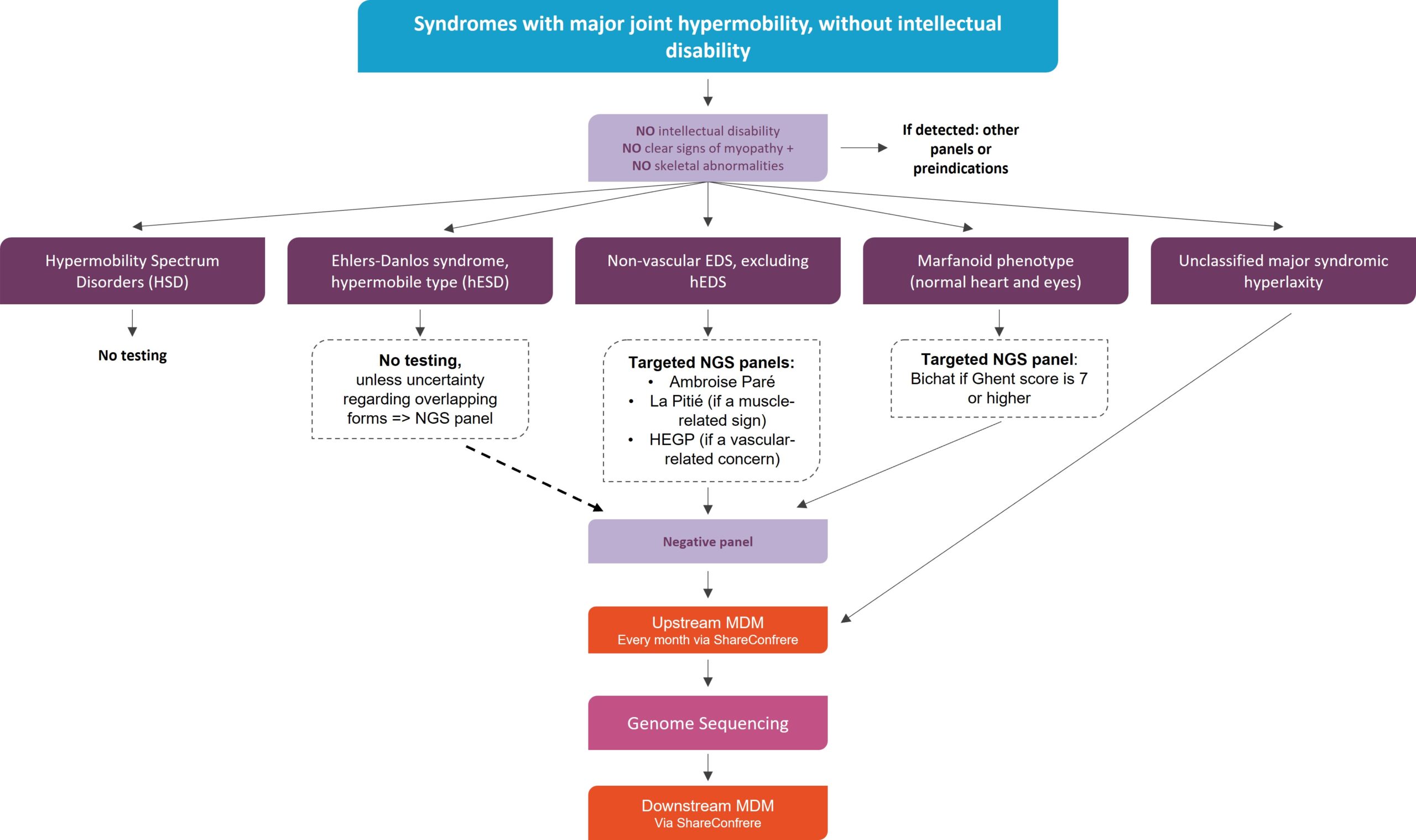
Patients with major hypermobility (without intellectual disability), without myopathy and without radiological bone abnormalities falling within one of the following subpopulations:
- non vascular EDS patients with negative targeted NGS panel, EXCEPT FOR HYPERMOBILE EDS.
- Hypermobile patients with marfanoid morphology (high Ghent systemic score), without vascular or ophthalmological involvement, with negative targeted NGS panel.
- Patients with major joint hypermobility as a key symptom + primary involvement of at least one other system, with a negative targeted NGS panel for the involved system .
Definition of hyperlaxity considered as MAJOR:
Paediatric cases: Beighton score ≥ 7/9 and Bulbena score ≥ 7/10, with significantly increased range of motion in all joints: fifth finger (hyperextension ≥120°), elbows (recurvatum ≥ 30°) and knees (recurvatum ≥ 30°).
Adult cases: Beighton score ≥ 6/9 and Bulbena score ≥ 5/10, with significantly increased range of motion in the joints of the 5th finger (hyperextension ≥120°), elbows (recurvatum ≥ 30°) and knees (recurvatum ≥ 30°).
Genome Sequencing in diagnostic strategy
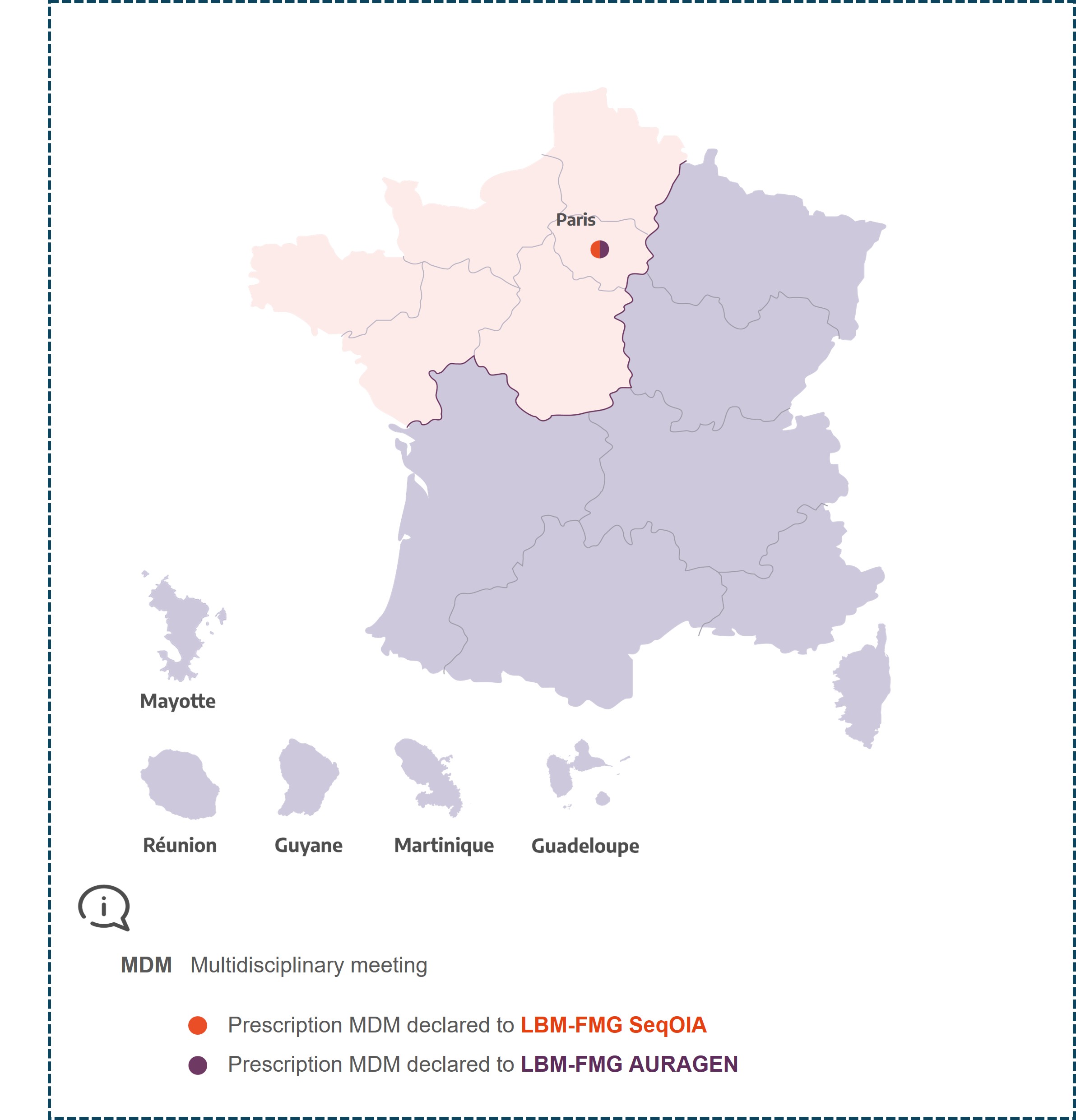
MDM cartography
MDM-FMG nv-EDS
Karelle BENISTAN
Caroline MICHOT
Baptiste VIERNE
Project Officer at the Reference Centre for Non-Vascular Ehlers-Danlos Syndromes
baptiste.vierne@aphp.fr